
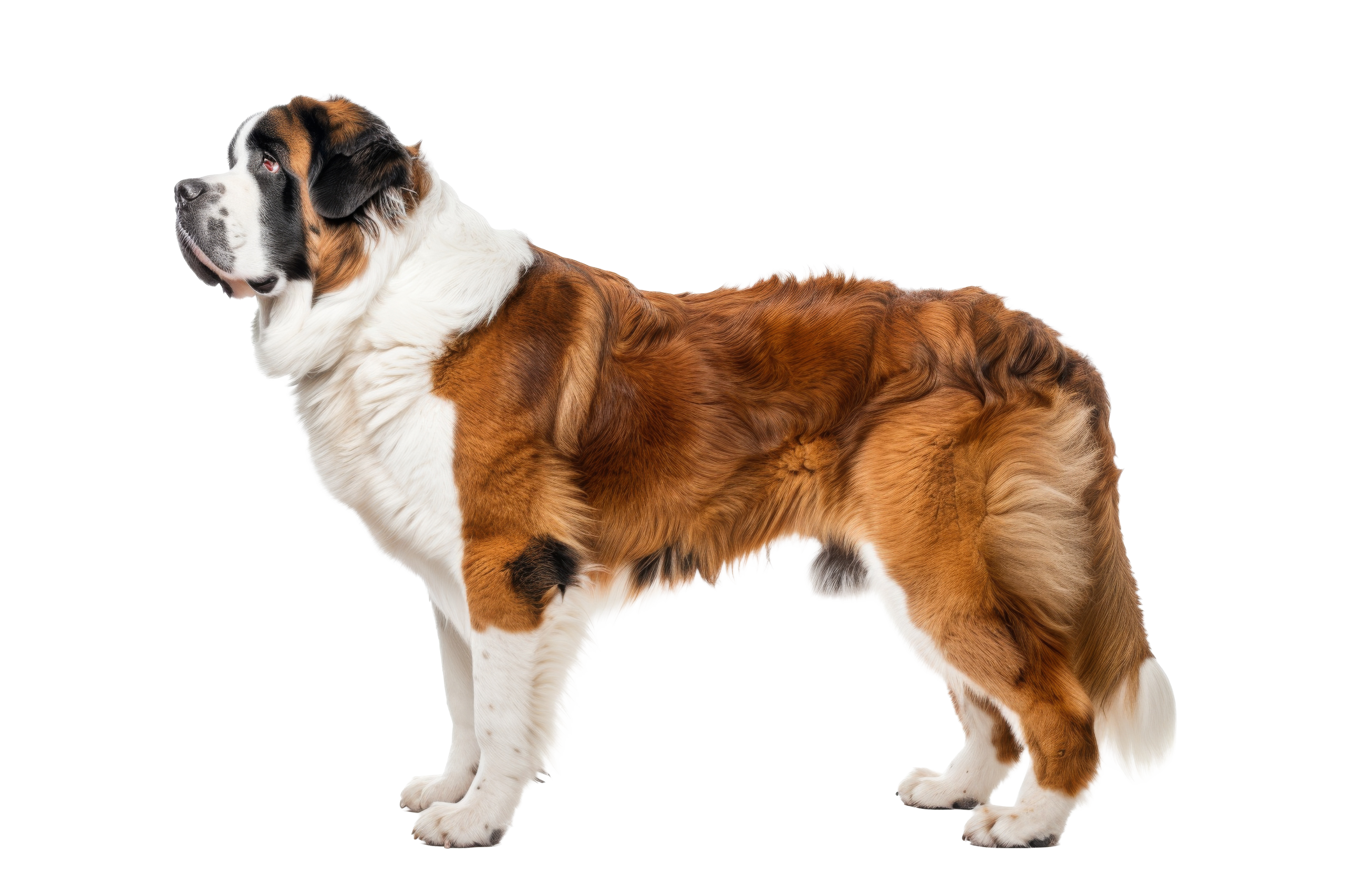

Weight
59-81 kg

Height
70-75 cm

Lifespan
8-10 years
What were St. Bernards originally bred for?
St. Bernards were originally bred by monks at the Great St. Bernard Hospice in the Western Alps, where they helped guard the property and guide travellers through the dangerous, snow-covered mountain passes between Italy and Switzerland.
Over time, they became famous worldwide for their search-and-rescue work. Their excellent sense of direction allowed them to find safe routes even during severe snowstorms, and they were especially skilled at locating people buried in avalanches. Working in teams, one dog would stay with the injured person to provide warmth while another returned to alert the monks.
Personality
Trainability level

Energy level

Barking level

Mental stimulation needs

Family Life
Family affection

Compatibility with young children

Compatibility with other dogs

Social Traits
Stranger friendliness

Playfulness level

Protective instincts

Adaptability level

Physical Traits
Shedding level

Grooming frequency

Coat length & type
Smooth coat, short-haired, weather-resistant, double-coated or rough coat, long-haired, weather-resistant, double-coated
Common health problems
Large and deep-chested breeds can develop bloat, a sudden, life-threatening stomach condition. Saint Bernard owners should learn what signs to look out for and what actions to take should they occur.
Read more: How to Avoid Getting Scammed When Buying a Puppy in South Africa
Other conditions sometimes seen in the breed include hip dysplasia and eye disease. A Saint can handle hot weather as long as he has a cool place to rest and lots of water, but going from air conditioning to high heat can cause serious distress.
Disclaimer: This information is based on average breed traits and data collected from various reputable sources. Every dog is unique and may differ from these general descriptions.