
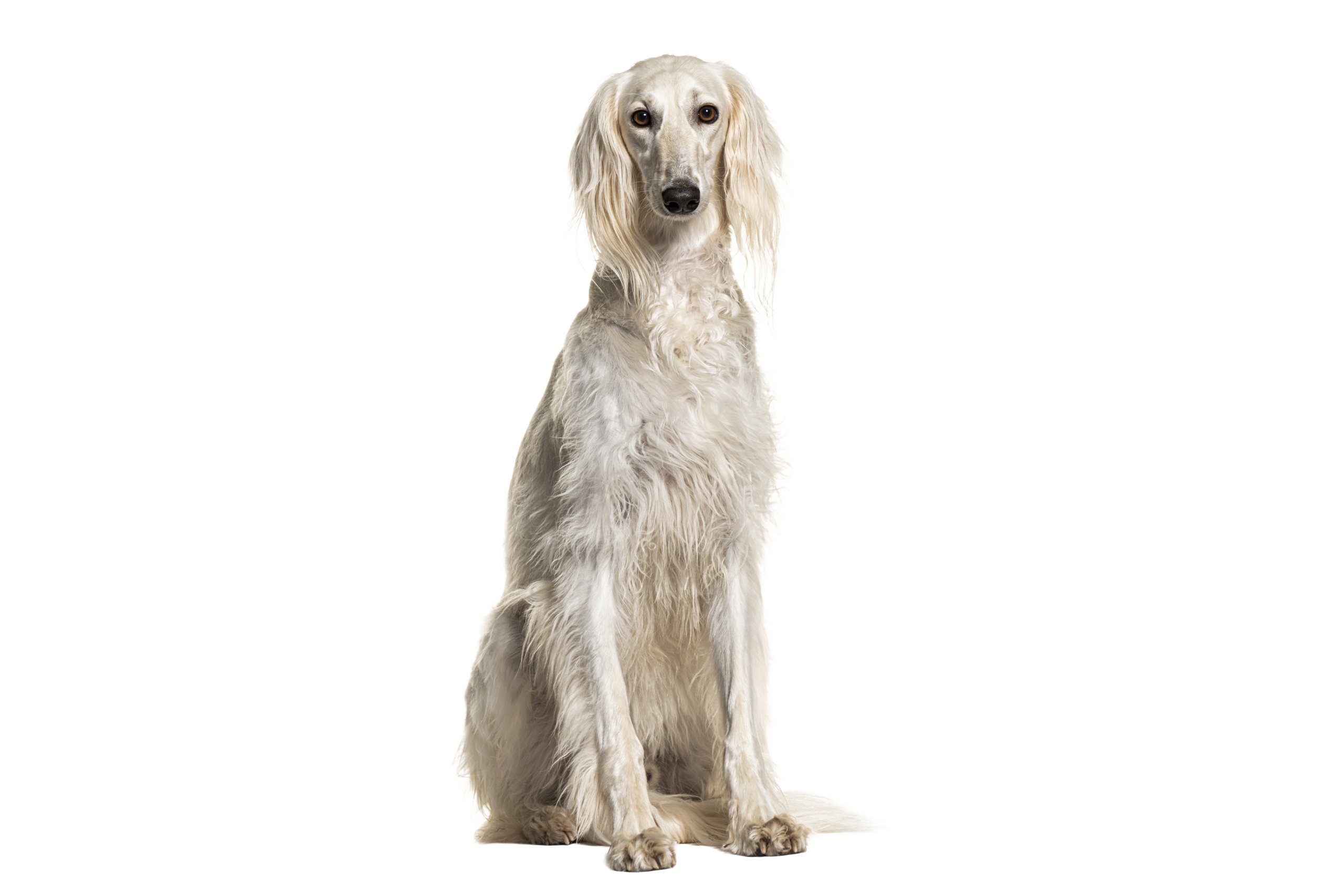

Weight
16-29 kg

Height
58-71 cm

Lifespan
12-14 years
What were Salukis originally bred for?
Salukis were originally bred by nomadic tribes and Middle Eastern royalty to hunt fast-moving prey using their keen eyesight.
As sighthounds, they relied on speed, agility, and endurance to chase animals such as gazelles, hares, and foxes across vast desert landscapes. Bedouin hunters often worked with Salukis and falcons as a team — the falcons would distract the prey while the Salukis swiftly pursued and captured it.
Their impressive hunting abilities and graceful appearance earned them great respect throughout the region. People often refer to the Saluki as the “Royal Dog of Egypt” because pharaohs treasured the breed, featured it in ancient artwork, and even had it mummified alongside royalty.
Personality
Trainability level

Energy level

Barking level

Mental stimulation needs

Family Life
Family affection

Compatibility with young children

Compatibility with other dogs

Social Traits
Stranger friendliness

Playfulness level

Protective instincts

Adaptability level

Physical Traits
Shedding level

Grooming frequency

Coat length & type
Medium length, feathered coat or short-haired, smooth coat
Common health problems
Salukis are generally a healthy breed and are not known for many serious inherited health problems. However, like all dogs, they can be prone to certain conditions, including heart disease, some types of cancer, and occasional autoimmune or blood disorders.
Read more: How to Avoid Getting Scammed When Buying a Puppy in South Africa
They may also be at risk of bloat (gastric torsion), a life-threatening condition that can occur if a dog exercises vigorously after eating. Owners should learn to recognise the signs of bloat and seek immediate veterinary care if it occurs.
Disclaimer: This information is based on average breed traits and data collected from various reputable sources. Every dog is unique and may differ from these general descriptions.