
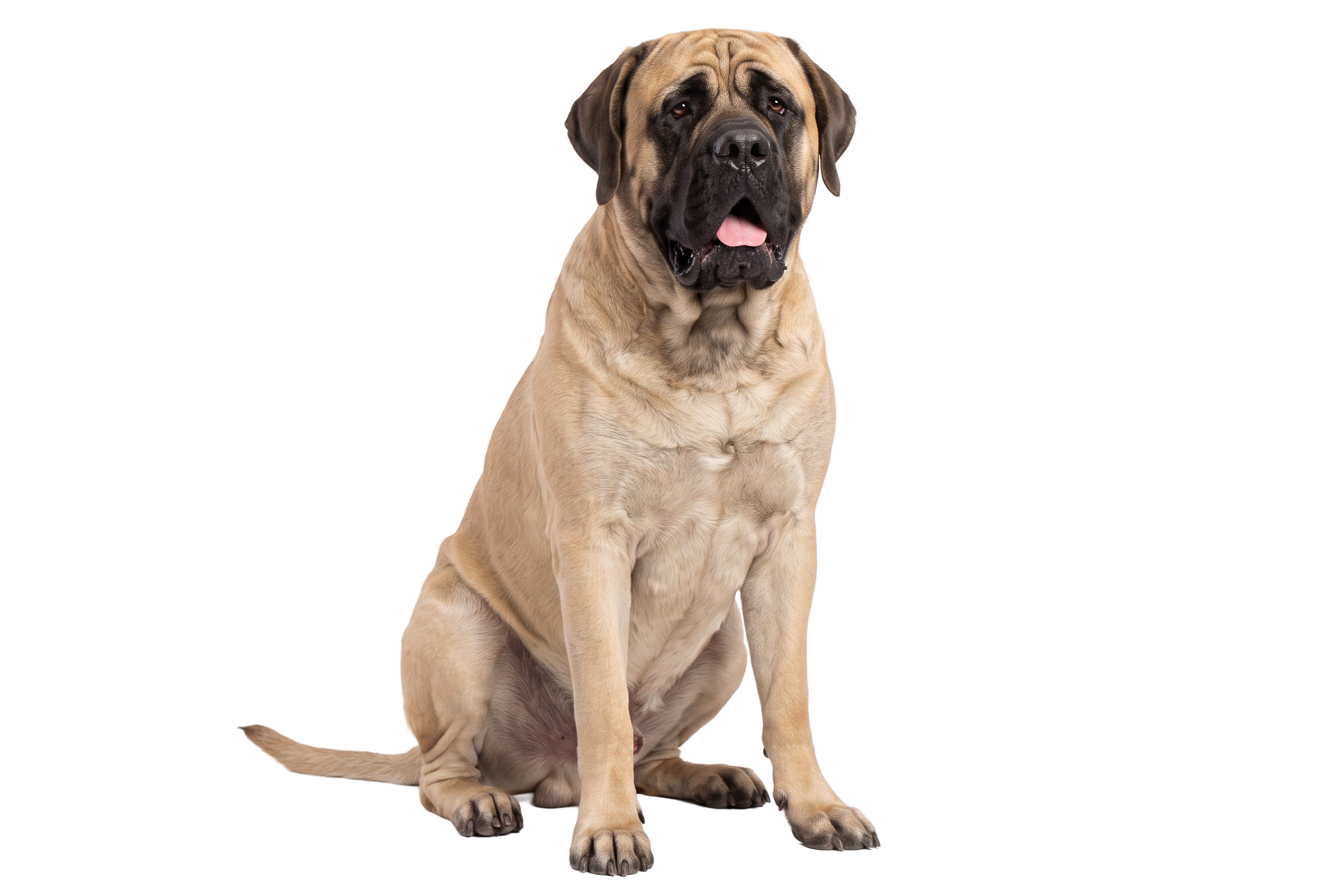

Weight
79-86 kg

Height
70-77 cm

Lifespan
6-12 years
What were Mastiffs originally bred for?
The Mastiff was originally bred to perform demanding jobs that required strength, courage, and loyalty. These powerful dogs guarded homes, estates, livestock, and even monasteries, protecting people and animals from intruders and predators such as wolves.
In ancient times, people used Mastiffs as war dogs, sending them into battle alongside soldiers. In some cultures, they also forced Mastiffs to fight lions, bears, and gladiators in Roman arenas. People also relied on these powerful dogs to track, catch, and hold dangerous game such as wild boar and bears.
Unfortunately, people also used Mastiffs in cruel blood sports such as bear-baiting, bull-baiting, and dog fighting until governments outlawed these practices in the 19th century.
Today, the breed is best known for its calm, gentle nature, but its history explains the courage and protective instincts that remain part of the Mastiff’s character.
Personality
Trainability level

Energy level

Barking level

Mental stimulation needs

Family Life
Family affection

Compatibility with young children

Compatibility with other dogs

Social Traits
Stranger friendliness

Playfulness level

Protective instincts

Adaptability level

Physical Traits
Shedding level

Grooming frequency

Coat length & type
Short-haired, double-coated
Common health problems
While Mastiffs are known for their strength and size, they can still develop certain health conditions. That’s why choosing a responsible breeder who screens their breeding dogs is so important.
Read more: How to Avoid Getting Scammed When Buying a Puppy in South Africa
Reputable breeders screen their dogs for inherited conditions such as hip dysplasia, heart disease, eye disorders, epilepsy, degenerative myelopathy, von Willebrand’s disease, certain cancers, and seasonal allergies.
Mastiffs commonly develop hygromas, which are soft, fluid-filled swellings that form over the elbows to protect the joints when lying on hard surfaces. Veterinarians usually recommend leaving these alone unless they become infected or cause discomfort.
They are also at risk of gastric dilatation-volvulus (GDV), commonly known as bloat, a life-threatening emergency in which the stomach fills with gas and may twist.
Disclaimer: This information is based on average breed traits and data collected from various reputable sources. Every dog is unique and may differ from these general descriptions.