
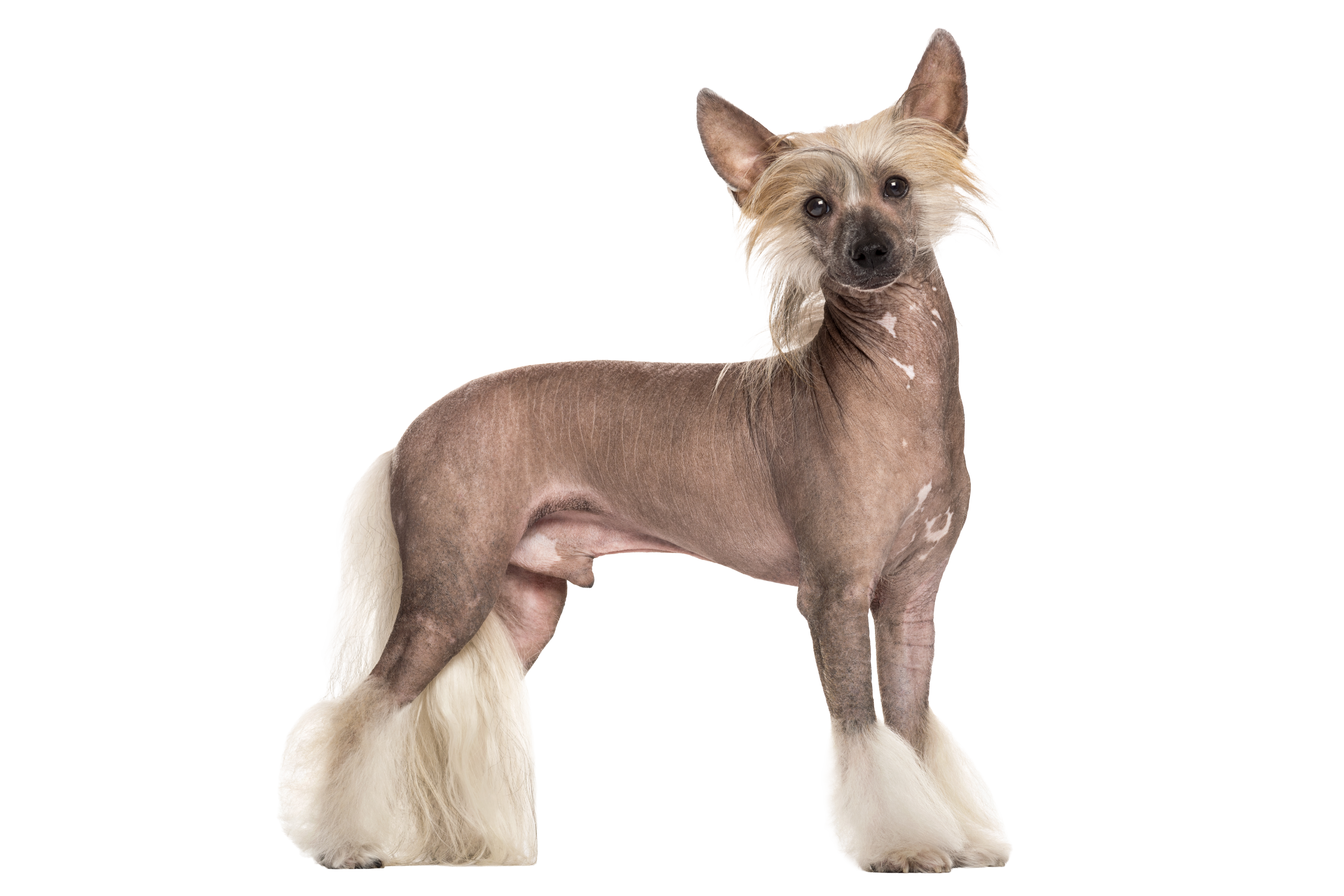

Weight
3-5 kg

Height
23-33 cm

Lifespan
13-18 years
What were Chinese Cresteds originally bred for?
The Chinese Crested was originally bred as a rat-catching dog and companion, particularly aboard trading ships. Their small, agile bodies made them well suited to squeezing into tight spaces and hunting rats and other vermin that could spread disease and damage food supplies.
By the 16th century, Chinese Cresteds were commonly kept aboard Chinese trading ships, where they helped control pests and served as affectionate companions to sailors. As ships travelled between ports, Chinese Cresteds were traded and became known in different parts of the world.
Over generations, their role gradually shifted towards companionship, and today they are best known as affectionate, lively companion dogs.
Personality
Trainability level

Energy level

Barking level

Mental stimulation needs

Family Life
Family affection

Compatibility with young children

Compatibility with other dogs

Social Traits
Stranger friendliness

Playfulness level

Protective instincts

Adaptability level

Physical Traits
Shedding level

Grooming frequency

Coat length & type
Medium-length or short-haired and hairless
Common health problems
Chinese Cresteds are generally healthy dogs, but like all breeds, they can be prone to certain inherited health conditions. Responsible breeders screen their dogs for eye problems such as progressive retinal atrophy, glaucoma and primary lens luxation.
Read more: How to Avoid Getting Scammed When Buying a Puppy in South Africa
Epilepsy can also occur occasionally. Like many small breeds, Chinese Cresteds may be affected by patellar luxation, where the kneecap slips out of place.
Another condition, Legg-Calvé-Perthes disease, affects the hip joint and cannot currently be detected through a DNA test, although changes may sometimes be identified through X-rays.
Disclaimer: This information is based on average breed traits and data collected from various reputable sources. Every dog is unique and may differ from these general descriptions.