
Puppy socialisation training is an important part of raising a confident, friendly and well-adjusted dog. The experiences puppies have during their early development can influence how they respond to people, animals, environments and everyday situations as they grow. Puppy training classes offer a safe, structured environment where young dogs can experience new situations while owners learn practical ways to support their puppy’s confidence and development.
What is puppy socialisation training?
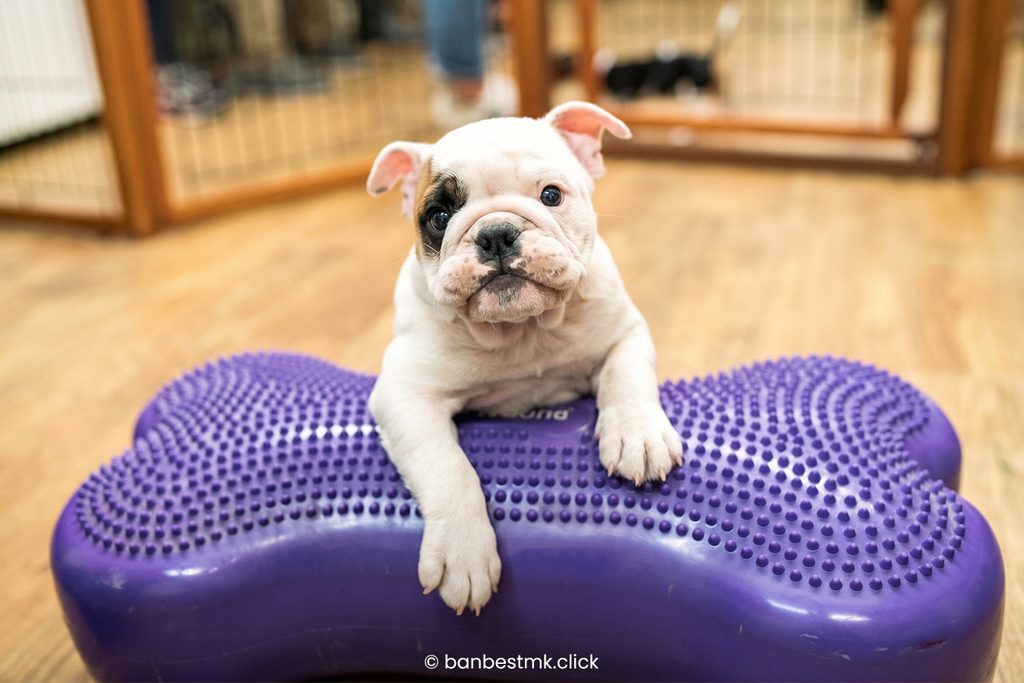
Puppy socialisation training teaches young dogs how to feel comfortable and behave appropriately around different people, dogs, environments, sounds, surfaces and experiences. It is about much more than simply allowing puppies to meet other dogs.
A well-structured puppy socialisation programme introduces new experiences gradually and positively. Puppies learn that unfamiliar situations can be safe and rewarding, helping them develop confidence and appropriate social skills.
What does a typical class involve?
A typical puppy socialisation class combines basic training with controlled exposure to new experiences. Puppies may practise simple commands such as sit, down, recall and focus while being introduced to different people, sounds, objects and environments.
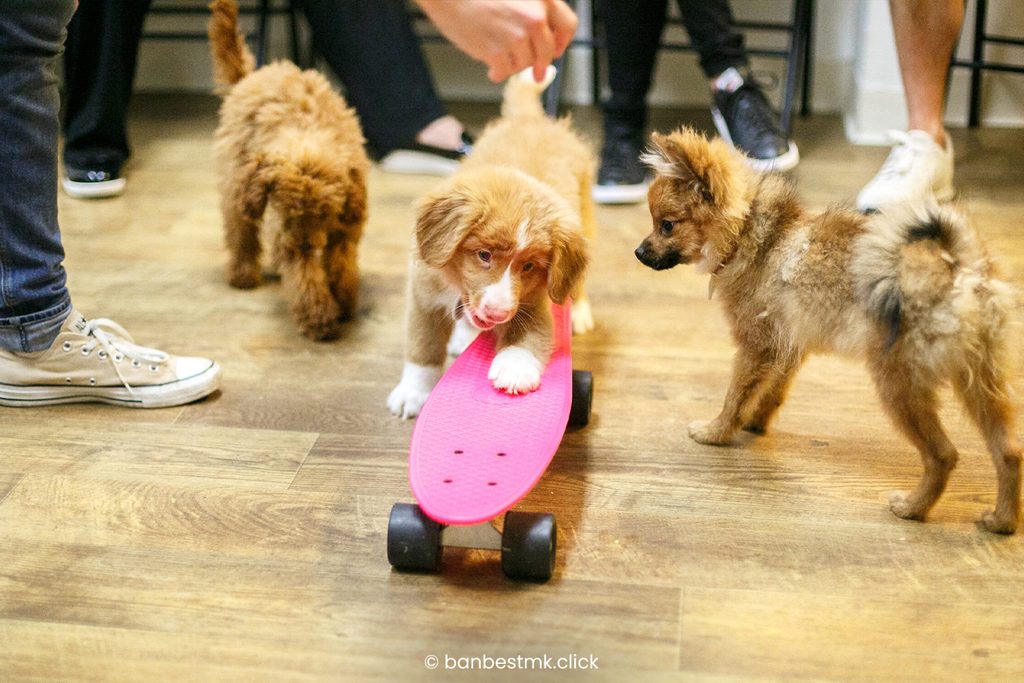
Depending on the training programme, classes may also include supervised interactions between puppies. These sessions help puppies learn appropriate play, communication and boundaries in a controlled environment.
Owners receive guidance throughout the class, learning to read their puppy’s body language and recognise signs of excitement, fear, stress or overstimulation.
Who is the training for?
Puppy socialisation training is designed for puppies during their early developmental stage, typically between 8 and 20 weeks of age. Starting training early can help puppies learn positive behaviours before unwanted habits become established.
The training is also valuable for owners. New puppy owners may be unsure about how to introduce their puppy to other dogs, visitors, busy environments or new experiences. Professional guidance can make this process safer, more positive and less overwhelming.
What will dogs and owners learn?
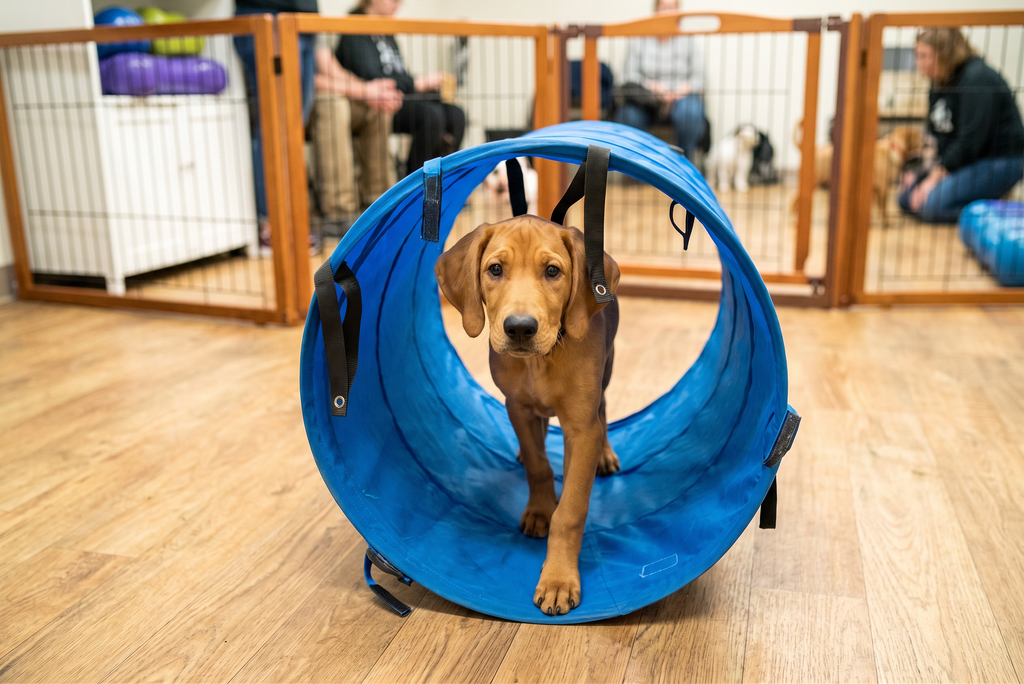
Puppies learn how to respond calmly to different situations, focus on their owner and interact appropriately with people and other dogs. They can also begin developing important skills such as recall, impulse control and basic obedience.
Owners learn how to communicate effectively with their puppy, use positive reinforcement and recognise canine body language. They also gain practical techniques for continuing socialisation and training at home and in everyday environments.
What are the benefits of this training?
Puppy socialisation can help build confidence, improve communication and encourage positive behaviour. Puppies that are gradually exposed to a variety of people, animals, sounds and environments may be better equipped to cope with unfamiliar situations as they mature.
Early puppy training can also strengthen the bond between dogs and their owners while establishing a foundation for future obedience training.
Most importantly, puppy socialisation allows young dogs to learn about the world in a positive, controlled way. With the right guidance and plenty of positive experiences, owners can help their puppies grow into confident companions that are better prepared for everyday life.